

Established recyclers like APMEX, Kitco, and BR Metals offer reliable precious metal recovery services whilst maintaining strict environmental standards. These trusted partners utilise advanced melting, chemical refining, and electrochemical processes that reduce CO2 emissions by up to 98% compared to traditional mining. Professional refiners specialise in bulk industrial recovery, while local jewellers handle smaller-scale materials like electronics and dental gold. Their certifications, transparent pricing, and commitment to sustainability make them essential players in the circular economy. Understanding their role reveals the future of responsible metals.

As environmental concerns continue to reshape the precious metals industry, trusted silver and gold recyclers have emerged as important players in sustainable resource management. Leading companies like APMEX, Kitco, and BR Metals have established themselves as reliable partners in the precious metals recycling ecosystem, offering extensive services for both individual sellers and industrial clients seeking sustainable solutions for their metal waste. These companies, along with others, are also part of a growing trend in responsible gold recovery from electronic waste, underscoring the importance of effective recycling practices.
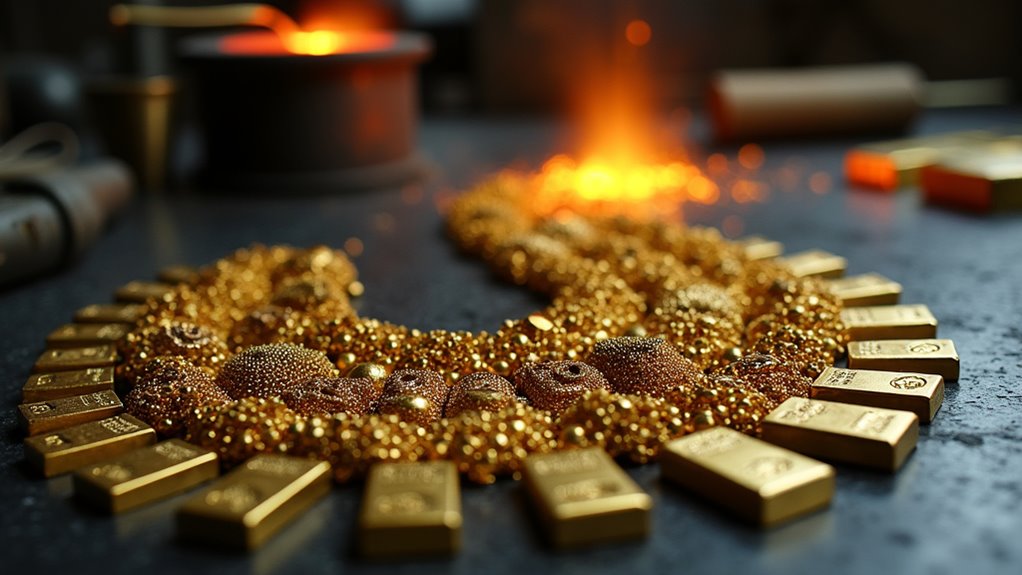
These established recyclers employ advanced recovery methods, including melting, chemical refining, and electrochemical processes to extract valuable metals from various sources. The environmental benefits are substantial, with recycling processes reducing CO2 emissions by up to 98% compared to traditional mining practices. This significant reduction in environmental impact has positioned metal recycling as a critical component in the fight against climate change and resource depletion. Additionally, innovative green technologies are being developed to further enhance eco-friendly gold recovery methods. Furthermore, the adoption of circular economy principles in the recycling process helps to ensure that resources are reused efficiently and sustainably.
Modern metal recycling slashes CO2 emissions by 98%, making it an essential weapon against climate change and resource scarcity.
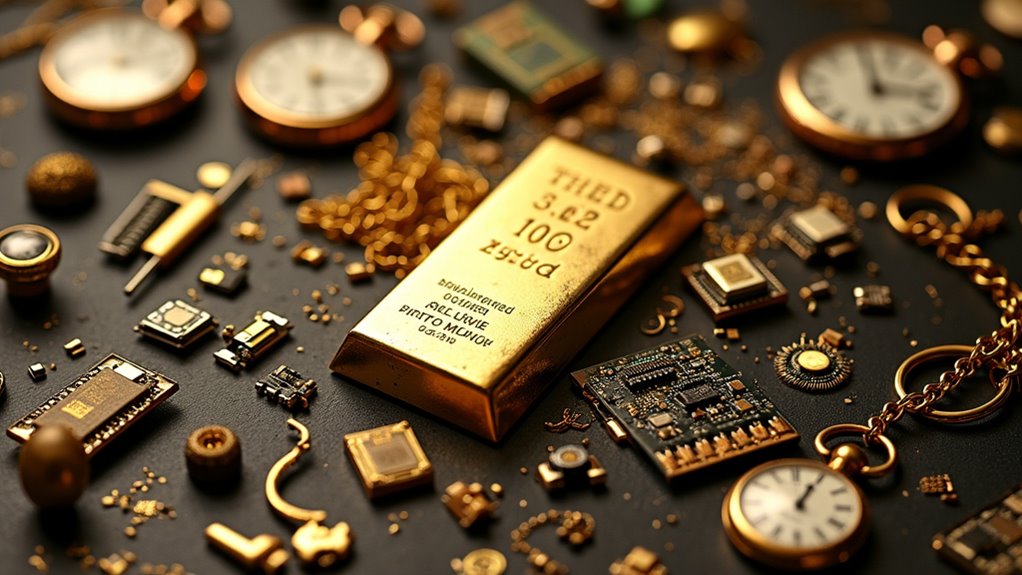
Professional refiners specialise in handling bulk recovery from industrial waste, particularly from electronics, X-ray films, and medical devices. Local jewellers complement these larger operations by providing accessible recycling options for smaller-scale materials such as unused jewellery and dental gold. This multi-tiered approach guarantees that precious metals can be recovered efficiently across different scales of operation.
The selection of a trusted recycler requires careful consideration of several key factors. Reputable companies typically possess relevant certifications and maintain transparent pricing structures. Many established recyclers, such as Kitco, which has operated since 1977, have built their reputation through decades of reliable service and commitment to sustainability.
The applications for recycled precious metals are diverse and growing. These materials find their way into sustainable jewellery production, electronic components, medical devices, and investment-grade bullion. The versatility of recycled metals, combined with their reduced environmental footprint, makes them increasingly attractive to environmentally conscious consumers and industries alike.
The environmental advantages of precious metal recycling extend beyond reduced emissions. By decreasing dependence on traditional mining, recycling helps preserve natural landscapes, conserve water resources, and protect ecosystems from over-extraction. Industrial waste recovery also plays a significant role in minimising hazardous waste disposal and resource wastage.
The economic opportunities created through advanced waste recovery technologies have strengthened the case for precious metal recycling. The industry’s high energy efficiency and contribution to sustainable manufacturing practices demonstrate how environmental responsibility can align with economic viability. As finite resources become increasingly scarce, the role of trusted recyclers in maintaining a circular economy for precious metals becomes more significant.
Through their commitment to sustainable practices and reliable service, trusted silver and gold recyclers are helping to transform the precious metals industry. Their work not only supports environmental conservation but also guarantees the continued availability of these valuable resources for future generations while maintaining the highest standards of quality and security in the recycling process. Additionally, gold recycling contributes to reducing mining impact, which is crucial for a greener future.
Frequently Asked Questions
How Long Does the Precious Metal Recycling Process Typically Take?
The precious metal recycling process typically takes between 5-10 business days from initial collection to final distribution.
The timeline varies depending on metal type, volume, and complexity of materials being processed.
Initial sorting usually takes 1-2 days, recovery processes span 2-3 days, refining requires 1-3 days, and final processing generally needs 1-2 days.

Complex materials or larger batches may extend these timeframes considerably.
What Documentation Do I Need to Recycle Inherited Gold Jewelry?
Essential documentation for recycling inherited gold jewellery includes government-issued identification, proof of inheritance (such as a will or death certificate), and original purchase receipts if available.
A detailed appraisal certificate from a certified jeweller helps verify authenticity and value.
Some jurisdictions require a signed affidavit confirming the items aren’t stolen.

It’s advisable to organise these documents before approaching a recycler to guarantee a smooth process.
Can I Recycle Gold-Plated Items Along With Pure Gold Pieces?
It’s not recommended to recycle gold-plated items alongside pure gold pieces.
The recovery processes differ considerably, with gold-plated items requiring specialised chemical or mechanical treatment to separate the gold from base metals.
Combining these materials can reduce the overall value and complicate the recycling process.

For best results and maximum returns, it’s best to have gold-plated items processed separately through refiners who specialise in plated material recovery.
What Are the Minimum Quantity Requirements for Recycling Precious Metals?
Most precious metal recyclers maintain minimum quantity requirements to guarantee economically viable processing.
Industry standard thresholds typically start at 50 grams, though requirements vary between facilities. Larger refiners often focus on industrial-scale quantities, while some smaller operations cater to lower volumes.
Processing costs and operational efficiency drive these minimums, making it essential for contributors to accumulate sufficient quantities before recycling.

Pool accounts may offer flexibility for smaller deposits.
Do Recyclers Accept Damaged or Tarnished Silver Items?
Yes, recyclers readily accept damaged or tarnished silver items.
The physical condition of silver doesn’t affect its intrinsic value, as recyclers focus on metal content rather than appearance. Tarnish, which occurs through natural oxidation, is easily removed during the refining process.
Even severely damaged pieces like broken jewellery or bent silverware are valuable for recycling. The metal’s purity and weight remain unchanged, making it suitable for recovery through standard refining methods.


