

Gold mining innovation Down Under is surging with investment in automation and robotics, transforming operations with driverless trucks and drills for safer, efficient work at sites like Newmont’s Boddington. AI and data analytics are also revolutionising exploration, uncovering hidden gold targets with precision, as seen with SensOre in Western Australia. At Karat.au, we’re passionate about Australia’s golden legacy and breaking down these trends. Stick with us to uncover more on this exciting evolution.
Automation and Robotics Transforming Gold Mining Operations

Revolutionising the gold mining landscape, automation and robotics are driving a seismic shift in how operations unfold across Australia’s rugged terrains.
At Karat.au, we’re thrilled to spotlight this transformation, where driverless trucks, like those at Newmont’s Boddington mine, haul ore 24/7, boosting safety and efficiency. These autonomous vehicles not only enhance productivity but also significantly reduce the potential for human error.
Autonomous drills, as seen in BHP’s Western Australian sites, deliver precision while keeping workers out of harm’s way. Furthermore, the integration of emerging technologies ensures that mining operations are not only effective but also increasingly sustainable. Innovations such as sustainable mining practices are becoming essential as the industry adapts to environmental regulations.

Remote centres in Perth oversee equipment hundreds of kilometres away, a feat Rio Tinto champions with their AutoHaul trains speeding up transport.
Underground, Gold Fields trials self-driving trucks, minimising risks in perilous zones.
These innovations slash costs, lift productivity by up to 30%, and even cut emissions through optimised fuel use. Moreover, AI and data analytics are enhancing operational decision-making, allowing for better resource management and proactive maintenance.
It’s a proud nod to Australia’s mining heritage, blending cutting-edge tech with our storied past.

We’re here to unpack these trends, ensuring clarity for every gold enthusiast Down Under.
AI and Data Analytics Revolutionizing Exploration and Efficiency

As the gold mining industry evolves, artificial intelligence (AI) and data analytics are emerging as game-changers in exploration and operational efficiency across Australia’s vast landscapes.
These cutting-edge tools analyse massive geological datasets at lightning speed, uncovering hidden patterns that human eyes might miss. Companies like SensOre have harnessed AI to pinpoint new gold targets, while cloud-based analytics process over a million data points per second in regions like Western Australia. Additionally, the integration of drones in gold exploration allows for more efficient aerial mapping and site analysis. Furthermore, predictive analytics enables mining companies to forecast yield with greater accuracy, leading to improved decision-making. Mining tech startups are pivotal in driving this transformation, bringing innovative solutions to age-old challenges.
AI tools uncover hidden gold patterns at lightning speed, with SensOre leading the charge in exploration across Western Australia’s vast terrain.
Beyond exploration, AI optimises drilling, slashing costs by up to 30% and minimising environmental impact. It’s a lifeline for junior explorers with tight budgets.

On the operational front, data analytics boosts plant efficiency and predicts equipment maintenance, cutting downtime considerably. Moreover, autonomous equipment is being integrated into mining operations, enhancing safety and reducing labor costs.
At Karat.au, we’re inspired by how these innovations honour Australia’s mining heritage while forging a sustainable future. It’s tech meeting tradition—ensuring gold’s timeless value shines brighter than ever, mate.
Frequently Asked Questions
How Do ESG Criteria Impact Gold Mining Investments?
ESG criteria greatly shape gold mining investments by influencing capital access and investor confidence.
Companies with strong environmental, social, and governance practices attract substantial funding from ESG-focused funds, while poor performance risks capital denial or shareholder unrest.
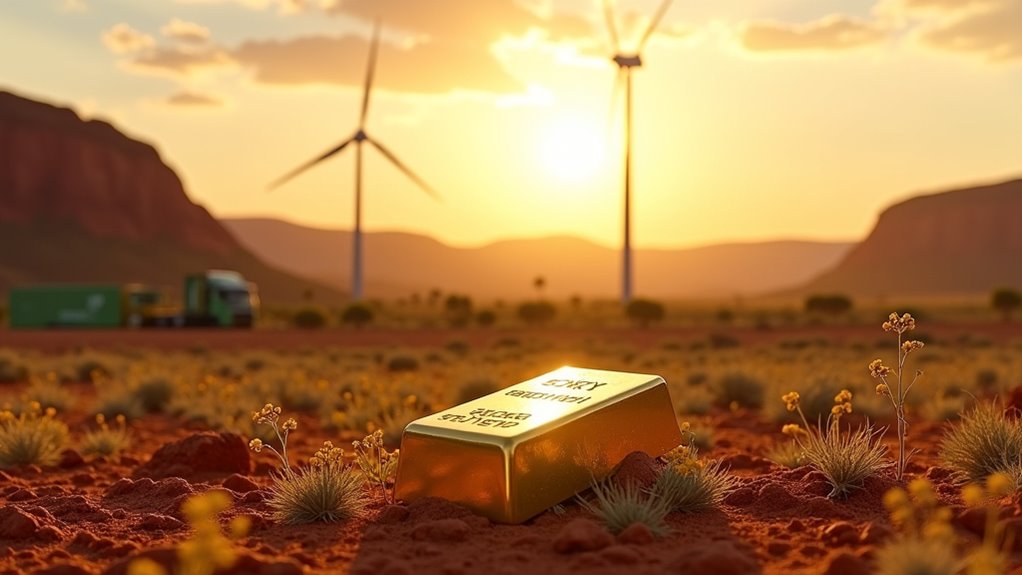
Beyond finance, ESG impacts a mine’s social licence to operate, demanding community engagement and sustainable practices.
At Karat.au, we reckon this balance of ethics and profit is key to gold’s lasting value.
What Sustainability Frameworks Are Gold Miners Adopting?
Gold miners are increasingly adopting robust sustainability frameworks to uphold ethical and environmental standards.
Many align with the Towards Sustainable Mining (TSM) framework, mandatory for Minerals Council of Australia members by 2025. Others adhere to the International Council on Mining and Metals (ICMM) principles, while World Gold Council’s Responsible Gold Mining Principles guide responsible practices.
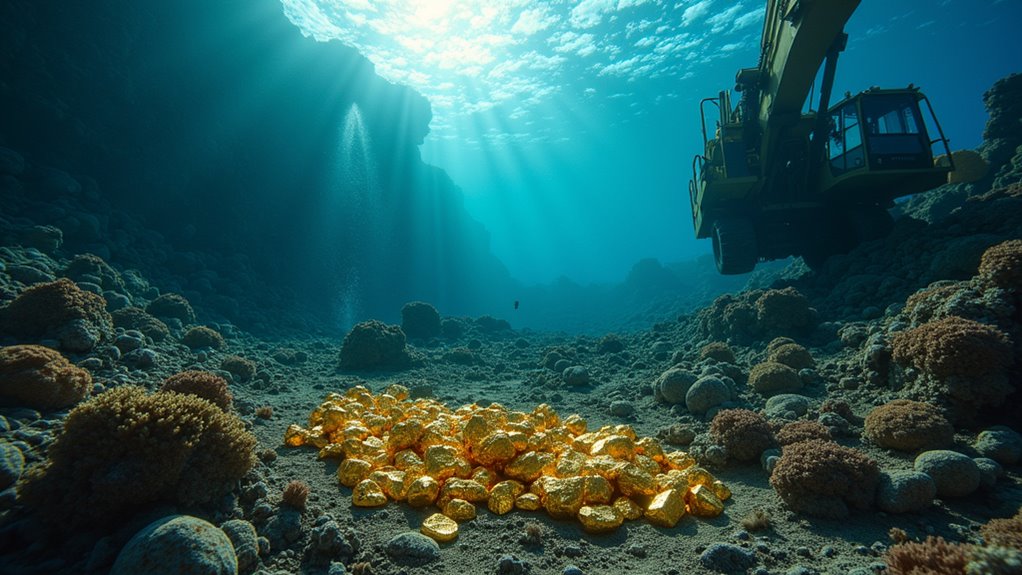
Additionally, Global Reporting Initiative (GRI) standards are widely used for transparent ESG reporting Down Under.
How Does Electrification Reduce Mining Carbon Emissions?
Electrification slashes mining carbon emissions by replacing diesel-powered gear with electric alternatives, directly cutting Scope 1 greenhouse gas outputs from combustion.
In Australia, this can halve emissions when paired with grid power, or near-eliminate them with renewables like solar.
Electric engines, far more efficient, also lower ventilation needs in underground mines, trimming Scope 2 emissions.

Plus, better air quality boosts worker safety—a win for all, mate.
What Government Funding Supports Gold Exploration Innovation?
Government funding plays a crucial role in supporting gold exploration innovation across Australia.
Initiatives like the Western Australian Exploration Incentive Scheme (EIS), with Round 30 awarding $7.28M, co-fund groundbreaking projects.
Queensland’s Collaborative Exploration Initiative (CEI) also backs high-risk, innovative work with grants like $275k for copper-gold targets.
Additionally, federal R&D Tax Incentives offer tax offsets, encouraging mining entities to push boundaries in tech and exploration, fueling Australia’s golden legacy.
How Does Mine Rehabilitation Affect Community Relations?
Mine rehabilitation profoundly impacts community relations, shaping trust and social acceptance. High-quality rehab showcases a company’s commitment to environmental care, enhancing its reputation and securing a social licence to operate.
Poor efforts, however, breed distrust and risk future approvals. Engaging locals early, restoring ecosystems, and planning post-mining land use for economic gain are crucial.
It’s about leaving a positive legacy, ensuring communities thrive long after the mine closes.


