

Recycling dental equipment for gold recovery offers both environmental and financial benefits to dental practices. Professional refineries employ sophisticated extraction methods like high-temperature furnace melting to separate valuable metals from non-metallic components. Up to 30% of refined gold annually comes from recycled materials, making the dental sector essential for sustainable precious metal recovery. This process reduces reliance on traditional mining while generating additional revenue for practices. The journey towards sustainable gold recovery reveals fascinating layers of opportunity.

Recycling Dental Equipment for Gold Recovery
Gold recovery from dental equipment represents a significant intersection of environmental sustainability and financial opportunity within the dental industry. The practice primarily focuses on reclaiming precious metals from crowns, bridges, fillings, and various dental alloys, which often contain considerable amounts of gold, palladium, and platinum. With up to 30% of refined gold annually coming from recycled materials, the dental sector plays an essential role in sustainable precious metal recovery.
The process involves sophisticated extraction methods, including high-temperature furnace melting and acid dissolution techniques. These procedures effectively separate valuable metals from non-metallic components like porcelain, guaranteeing maximum recovery rates. While mercury amalgamation remains an option, it’s increasingly avoided due to environmental concerns. Modern refineries employ advanced separation technologies to achieve ideal results, carefully weighing extracted gold to determine precise value. Recycling practices in the dental industry not only contribute to gold recovery but also promote a more sustainable circular economy. Furthermore, innovative techniques for gold scrap recovery in industrial applications are influencing practices in the dental sector, leading to improved outcomes.

Environmental benefits of dental gold recycling are substantial. By reducing reliance on traditional mining operations, the practice helps minimize ecological damage and carbon emissions. Proper disposal and recycling greatly decrease the amount of dental waste entering landfills while aligning dental practices with contemporary eco-friendly standards. The reuse of existing resources also requires considerably less energy compared to extracting raw materials. Moreover, the journey of gold recycling showcases how recycled gold is returned to the supply chain, emphasizing the importance of this practice.
For dental practices, the financial advantages are compelling. The recovery and sale of gold scrap generates additional revenue streams, helping offset operational costs and enhance profitability. Refiners typically compensate based on gold value per gram or pennyweight, less processing fees. Establishing transparent agreements with reputable refiners guarantees dental offices receive fair compensation for their materials.
However, the industry faces several challenges. Technical difficulties in separating gold alloys from contaminants persist, and some refining processes require careful handling of hazardous chemicals. Variable refining charges can impact returns, while limited access to specialized recycling programs in certain areas poses logistical hurdles. Additionally, valuable metals in some dental materials may go unnoticed and end up discarded.
Specialized recycling programs have emerged to address these challenges, providing thorough solutions for dental waste management. These initiatives offer guidance on regulatory compliance, facilitate safe transport and processing, and sometimes include manufacturer take-back schemes. Through collaboration with experienced refiners, these programs guarantee precise and efficient material recovery.
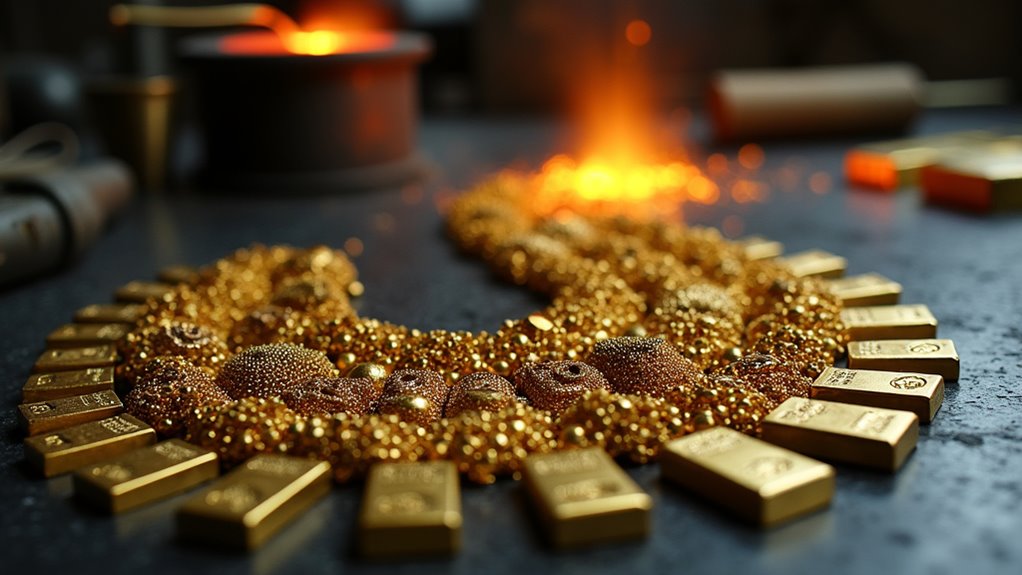
The future of dental gold recovery looks promising as chemical extraction methods continue to advance. With growing environmental awareness and increasing precious metal prices, more dental practices are recognizing the importance of implementing robust recycling protocols. This trend not only supports sustainable practices but also contributes to the industry’s long-term economic viability.
Frequently Asked Questions
What Percentage of Dental Equipment Typically Contains Recoverable Gold?
Based on industry standards, approximately 35-40% of dental equipment contains recoverable gold, primarily in crowns, bridges, and inlays.
High-noble alloys, which comprise about 25% of dental work, contain the highest gold content at 40-60%.
Noble alloys make up another 15% of dental applications, with lower but still significant gold percentages.

The remaining dental equipment typically uses non-noble alloys with minimal or no gold content.
How Much Does It Cost to Start a Dental Gold Recycling Business?
Starting a dental gold recycling business typically requires an initial investment of $200,000 to $750,000.
Major costs include facility leasing at approximately $20 per square metre annually, equipment ranging from $100,000 to $500,000, and regulatory compliance fees accounting for roughly 10-15% of startup costs.
Additional expenses involve marketing ($50,000), staff wages ($20,000-$50,000 monthly), and ongoing operational costs like consumables, shipping, and maintenance.
Are Special Permits Required for Recycling Precious Metals From Dental Equipment?
Generally, special permits aren’t required for recycling precious metals from dental equipment when working with certified refiners or recyclers.

However, due to hazardous materials like mercury in dental amalgam, compliance with environmental regulations is crucial.
While the U.S. EPA exempts legitimately recycled precious metals under 40 CFR 261.6(c), operators must guarantee proper handling and disposal practices.
Working with licensed recyclers helps maintain regulatory compliance whilst maximizing recovery value.
Which Dental Tools and Equipment Have the Highest Gold Content?
Among dental tools and equipment, high noble alloy crowns and inlays contain the most significant gold content.

Degulor alloys, commonly used in crowns, feature gold concentrations between 65.5% and 87.5%.
Traditional gold inlays and onlays can contain up to 90% gold content, whilst 18-karat dental crowns typically comprise 75% gold.
Older dental bridges and restorations made with noble alloys also maintain substantial gold percentages, usually ranging from 40% to 75%.
What Safety Precautions Should Be Taken When Extracting Gold From Dental Materials?
When extracting gold from dental materials, proper safety protocols are essential.

Workers must wear appropriate PPE including gloves and fitted masks to prevent exposure to mercury vapours and metal particulates. A well-ventilated workspace with proper exhaust systems is vital.
Fire safety measures should be implemented, including readily available extinguishers and proper storage of flammable chemicals.
Environmental regulations for waste disposal must be strictly followed to protect both workers and the environment.


