

Recycled 14K gold offers the same quality and durability as newly-mined gold whilst providing significant environmental benefits. The process involves collecting and refining existing gold from jewellery and electronics, maintaining identical purity standards and structural integrity. This sustainable option reduces habitat destruction, water consumption, and greenhouse gas emissions compared to traditional mining. As an ethically-conscious choice, recycled gold contributes to a circular economy in the jewellery market, with much more to discover about its lasting impact.

While traditional gold mining continues to raise environmental and ethical concerns worldwide, recycled 14K gold has emerged as a sustainable alternative that maintains the precious metal’s inherent value and beauty. According to the World Gold Council, recycled gold contributed to 28% of the global gold supply in 2020, primarily sourced from jewellery and electronic waste. This notable proportion demonstrates the growing significance of gold recycling in meeting market demands while minimising environmental impact.
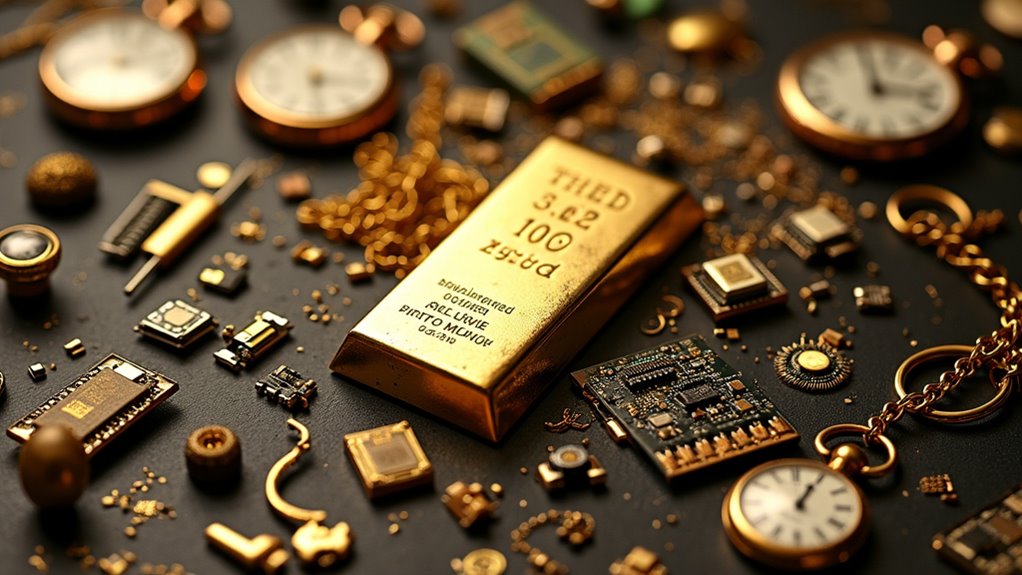
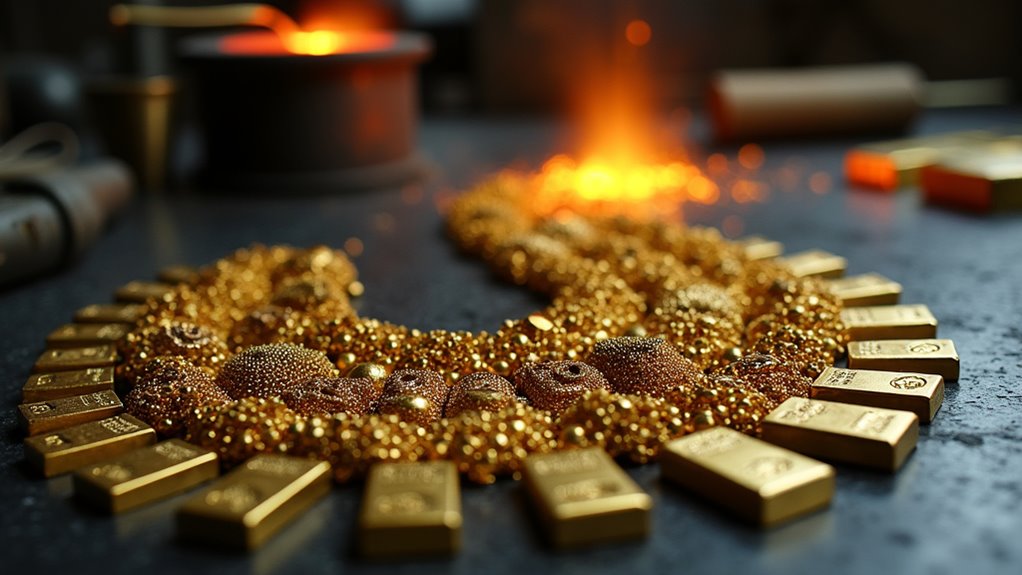
The process of creating recycled 14K gold begins with collecting old jewellery, electronic components, and various gold-containing materials. These items undergo careful assessment to determine their purity using the karat system before being melted down and refined to remove impurities. The resulting pure gold is then realloyed with other metals like silver and copper to achieve the specific 14K composition of 58.5% pure gold, creating a durable and valuable material suitable for new applications. This gold recycling process ensures that valuable materials are efficiently reclaimed and utilized. In fact, the purity and performance of recycled gold can match that of newly mined gold, making it a viable option for consumers seeking quality.
One of the most compelling aspects of recycled 14K gold is its contribution to environmental conservation. By reducing reliance on traditional mining practices, recycled gold helps prevent habitat destruction, minimise water consumption, and decrease greenhouse gas emissions. The recycling process requires considerably less energy compared to extracting new gold from mines, making it an environmentally responsible choice for conscientious consumers. Additionally, gold recycling plays a crucial role in supporting a sustainable circular economy by ensuring that valuable materials are reused rather than discarded.
Recycled 14K gold exemplifies sustainable luxury, protecting ecosystems while delivering the same exquisite quality as traditionally mined gold.
The durability and quality of recycled 14K gold remain identical to newly mined gold, offering an excellent balance between purity and strength. Its composition makes it ideal for everyday wear, ensuring that jewellery pieces maintain their beauty and structural integrity for generations. This lasting quality, combined with its sustainable sourcing, makes recycled 14K gold an increasingly popular choice in the modern jewellery market.
Beyond environmental benefits, recycled gold addresses vital ethical considerations in the industry. By choosing recycled 14K gold, consumers avoid supporting potentially exploitative mining practices and reduce demand for gold from conflict zones. This ethical dimension has become increasingly important as awareness grows about the social impacts of traditional mining operations.
From an economic perspective, recycled 14K gold holds equivalent value to newly mined gold, offering potential cost savings in production while maintaining market worth. The recycling process provides an efficient means of reclaiming precious metals from existing sources, contributing to a more sustainable and circular economy in the jewellery sector.
As the jewellery industry continues to evolve, recycled 14K gold represents a forward-thinking approach that balances traditional value with modern environmental and ethical considerations. Its growing popularity reflects a broader shift towards sustainable practices in luxury goods, demonstrating that responsible sourcing and premium quality can successfully coexist in the contemporary market.
Frequently Asked Questions
Can Recycled 14K Gold Tarnish Over Time?
While 14K gold can experience some tarnishing over time, it’s highly resistant due to its 58.3% pure gold content.
Environmental factors like humidity, chemicals and air pollutants may cause slight discolouration of the alloy metals present.
However, proper care and maintenance can greatly reduce tarnishing risks.
Regular cleaning with a soft cloth and storing pieces in airtight containers helps preserve the jewellery’s lustre for years to come.
How Can I Verify if My 14K Gold Jewelry Is Made From Recycled Materials?
Verifying recycled 14k gold jewellery requires several key steps.
Consumers should check for certifications from organisations like the Responsible Jewellery Council and request Chain-of-Custody documentation.

Reputable manufacturers provide transparency through material lifecycle information and clear sourcing policies.
Look for specific hallmarks or stamps indicating recycled content, and consider professional authentication services.
Third-party testing can also confirm the presence of recycled materials in jewellery pieces.
Does Recycled 14K Gold Cost Less Than Newly Mined Gold?
Recycled 14k gold typically costs about the same as newly mined gold in retail markets, despite lower production costs.
While recycling processes require less energy and avoid expensive mining operations, these savings aren’t usually reflected in consumer prices.

The market determines gold prices primarily by weight and purity rather than origin.
Some retailers may offer slight discounts on recycled gold pieces to attract environmentally-conscious buyers, but the difference is generally negligible.
Are There Specific Jewelry Designers Who Specialize in Recycled 14K Gold Pieces?
Several prominent jewelry designers specialise in recycled 14K gold pieces.
Ana Luisa creates sustainable designs using 100% recycled gold, while Kinn Studio offers their KinnCycle program for repurposing old jewelry.

Studio Kroewe crafts bespoke pieces from recycled gold, providing transparent valuation processes.
Linjer focuses on minimalist designs using recycled gold sourced from electronic waste and old jewelry, appealing to environmentally conscious consumers seeking sustainable elegance.
What Is the Environmental Impact of Recycling Gold Compared to Mining?
Recycling gold has considerably less environmental impact compared to mining.
While mining requires extensive land clearing, releases toxic chemicals, and contributes to deforestation and habitat destruction, recycling gold reduces these negative effects.

Mining operations generate substantial carbon emissions and contaminate water sources, whereas recycling existing gold maintains resources already in circulation.
However, recycling alone cannot fully address mining’s ongoing environmental damage, as global demand continues to drive new extraction.


