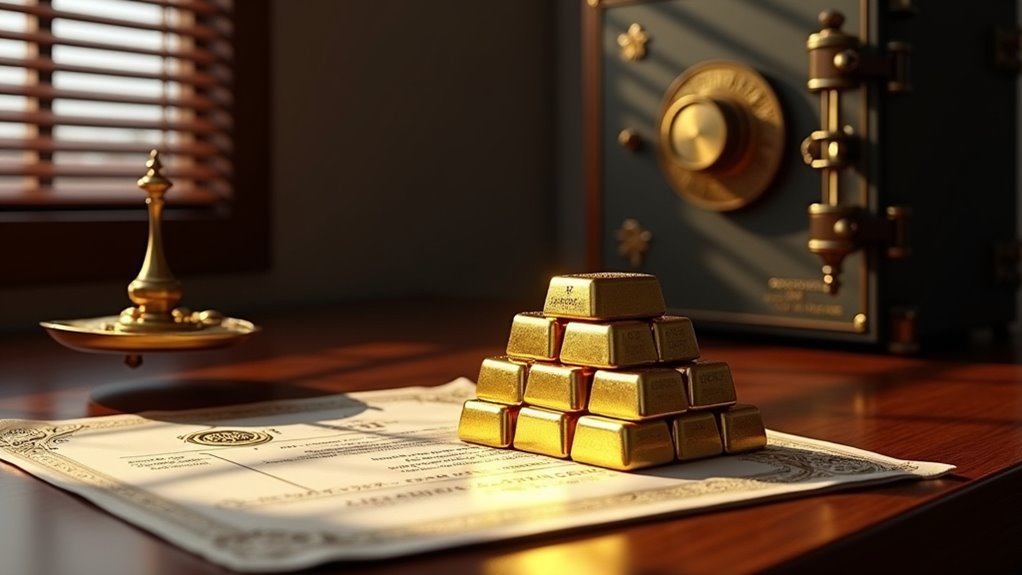
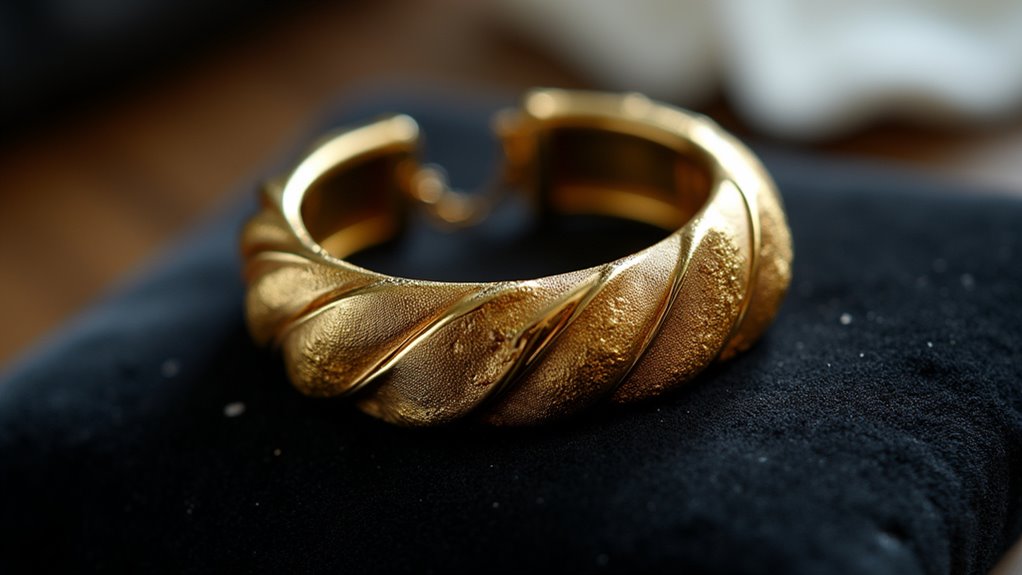
14K gold consists of 58.3% pure gold blended with 41.7% other metals like copper, silver, and zinc. This composition creates a durable alloy that resists corrosion while maintaining gold’s distinctive lustre. The balanced metal ratio makes 14K gold ideal for everyday jewellery, offering enhanced strength compared to higher karat options without sacrificing aesthetic appeal. Its malleability enables intricate designs, while proper maintenance guarantees long-lasting beauty. The world of 14K gold holds many more fascinating properties to explore.

A timeless alloy that balances durability with beauty, 14K gold stands as one of the most popular precious metal compositions in modern jewellery. Comprising 58.3% pure gold and 41.7% other metals, this versatile alloy offers a perfect combination of strength and aesthetic appeal. The careful selection of alloying metals, including copper, silver, zinc, nickel, and palladium, contributes unique properties that enhance the final product’s durability while maintaining gold’s inherent lustre. Additionally, understanding gold purity standards can help buyers make informed decisions when selecting jewellery. The presence of gold hallmarks on 14K gold items can also provide assurance of their authenticity and quality. Furthermore, the choice of alloying metals can significantly impact the overall appearance and performance of the gold. Certified gold typically commands a premium due to its verified purity, which reinforces consumer confidence.
The remarkable fusion of gold with precious metals creates 14K gold, delivering both strength and splendor in a perfectly balanced composition.
The composition of 14K gold allows for remarkable versatility in colour variations. When alloyed with copper and silver, it produces the traditional warm yellow tone beloved in classic jewellery pieces. Increasing the copper content creates rose gold, characterised by its distinctive reddish-pink hue. White gold, achieved through alloying with silver or palladium, often receives a rhodium plating for enhanced brilliance and protection.
The physical properties of 14K gold make it particularly suitable for everyday wear. Its improved durability, compared to higher karat alternatives, stems from the precise balance of alloying metals. While pure 24K gold is notably soft and susceptible to wear, 14K gold’s composition provides superior resistance to corrosion, rust, and tarnish. This durability, combined with its malleability, enables craftsmen to create intricate jewellery designs that maintain their structural integrity over time.

The practical applications of 14K gold extend across various jewellery categories. Its strength and beauty make it an excellent choice for engagement rings and wedding bands, where daily wear demands resilience. The alloy’s versatility supports the creation of detailed necklaces, bracelets, and earrings, while its affordability relative to higher karat options has contributed to its widespread popularity in the jewellery market.
Maintaining 14K gold jewellery requires thoughtful care to preserve its appearance and longevity. Regular cleaning helps maintain its characteristic shine, while proper storage in dedicated jewellery boxes or pouches prevents unnecessary scratching and damage. White gold pieces may occasionally need rhodium re-plating to restore their brilliant finish, and periodic inspections guarantee the security of settings and overall integrity of the piece.
The enduring appeal of 14K gold lies in its practical balance between purity and performance. While higher karat gold may boast greater gold content, 14K’s composition delivers ideal durability for fine jewellery applications. This practical approach to precious metal alloying has established 14K gold as a cornerstone of modern jewellery design, offering consumers a reliable and beautiful option that stands the test of time without compromising on quality or aesthetics. Additionally, the certification process through gold hallmarking ensures that consumers can trust the purity of the gold they purchase.
Frequently Asked Questions
Can 14K Gold Tarnish Over Time?
Yes, 14K gold can tarnish over time due to its alloy composition.
The non-gold metals in the alloy, particularly copper and silver, react with environmental elements like oxygen, moisture, and chemicals.

While pure gold doesn’t tarnish, these alloy metals make up 41.7% of 14K gold and are susceptible to oxidation, resulting in a dulling or darkening of the jewellery’s surface.
Regular cleaning and proper storage can help minimise tarnishing.
Is 14K Gold Safe for People With Nickel Allergies?
The safety of 14k gold for people with nickel allergies depends on the specific alloy composition.
While yellow and rose 14k gold are typically nickel-free and safe, white 14k gold often contains nickel which can trigger allergic reactions.

Those with nickel sensitivities should be cautious and verify the exact composition before purchasing.
Alternative options include nickel-free white gold alloyed with palladium, or opting for higher-karat yellow gold jewellery.
How Can I Test if My 14K Gold Jewelry Is Authentic?
Several reliable methods can verify authentic 14K gold jewellery.
Visual inspection for hallmarks like “14K” or “585” provides initial confirmation.

Non-destructive tests include the magnet test, as real gold isn’t magnetic, and the ceramic plate test, which should leave a golden streak.
For definitive results, professional jewellers can perform acid testing or XRF analysis.
The water test is also useful—genuine 14K gold sinks due to its density.
Why Does 14K Gold Sometimes Have Different Colors?
The different colours in 14K gold come from varying combinations of metals mixed with pure gold. While gold makes up 58.3% of the alloy, the remaining 41.7% consists of different metals that create distinct hues.
Copper and silver produce traditional yellow gold, higher copper content creates rose gold‘s pinkish tone, while metals like palladium or nickel result in white gold.

Manufacturers also use specific heat treatments and finishing techniques to enhance these colours.
Does 14K Gold Maintain Its Value Better Than Other Gold Purities?
14K gold maintains its value reasonably well, though not as effectively as higher purities like 18K or 24K.
Its popularity in jewellery markets and excellent durability contribute to consistent demand and value retention.
While pure gold (24K) is superior for investment purposes, 14K’s practical balance of strength and gold content makes it a reliable choice for everyday pieces.

Its widespread market acceptance guarantees stable resale opportunities, particularly in the U.S. market.