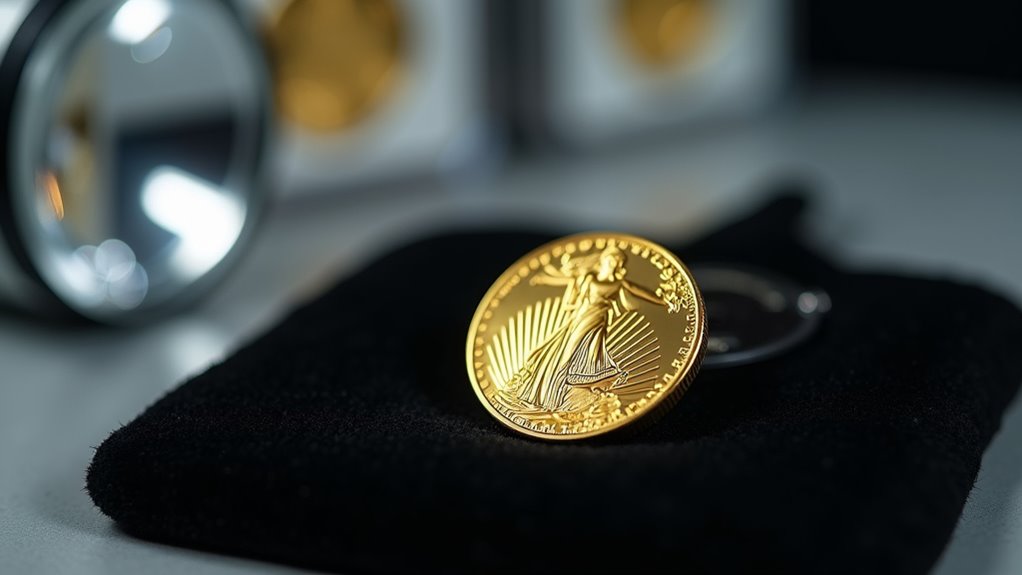
Importing gold coins into the US requires careful adherence to CBP regulations and proper documentation. While gold coins are generally duty-free, all imports must be declared, with FinCEN 105 forms required for precious metals valued over $10,000. Thorough record-keeping, including purchase receipts and certificates of authenticity, is vital. Restrictions apply to counterfeit coins and gold from embargoed nations. Understanding these important guidelines helps guarantee smooth customs clearance and compliance, with much more to discover about this fascinating topic.

While importing gold coins into the United States is generally duty-free, travellers must navigate a thorough set of regulations and declaration requirements to confirm compliance with customs laws. All gold imports, regardless of their value, must be declared to Customs and Border Protection (CBP) upon entry into the country. For precious metals valued at $10,000 or more, travellers are required to complete a FinCEN 105 form for monetary instruments. The regulatory bodies governing gold trading provide guidelines that are important for compliance. Additionally, possessing a significant amount of gold can bolster a nation’s financial security. Licensing requirements for gold dealers may also apply, depending on the state. Moreover, understanding ethical gold sourcing practices can enhance the integrity of imported items.
The importation process demands meticulous attention to detail and proper documentation. Travellers should maintain extensive records, including purchase receipts, certificates of authenticity, and accurate valuations that correspond with customs declarations. While gold coins themselves don’t attract duty fees, failing to properly declare these items can result in substantial penalties, including confiscation of the precious metals.
Careful documentation and detailed records are essential when importing gold coins, as improper declarations can trigger severe consequences and confiscation.
Certain restrictions apply to specific types of gold coins and their origins. The U.S. strictly prohibits counterfeit coins and unauthorized copies lacking proper markings from the issuing country. Additionally, gold originating from embargoed nations such as Iran, Cuba, and Sudan is banned under current regulations. Violations of these restrictions can lead to severe consequences, including seizure of the items and potential legal ramifications.

Travellers carrying gold coins should implement proper security measures during transit to prevent loss or theft. It’s advisable to research destination-specific regulations before travelling, as additional documentation or customs fees might apply when entering different jurisdictions. Maintaining original purchase receipts can prove invaluable when verifying the value of gold items during customs inspections.
CBP officers retain the authority to inspect declared gold coins upon arrival, even when proper documentation has been submitted. These inspections may include verification of the gold’s origin to confirm compliance with embargo laws. Multiple violations or attempts to misrepresent imported gold can result in travel restrictions or significant financial penalties.
The international landscape of gold coin importation requires careful consideration of varying regulations across different countries. Successful navigation of these requirements relies on thorough preparation and accurate documentation. Importers should pay particular attention to packaging and labeling requirements, confirming all necessary forms are completed precisely and retained for future reference. Economic crises often drive the demand for gold, making compliance with import regulations even more crucial.
To facilitate smooth customs clearance, travellers should maintain transparent communication with customs officials and confirm all declarations are truthful and complete. While the process may seem intimidating, understanding and following these guidelines helps prevent unnecessary delays or complications during the import process. Regular updates to import regulations make it essential for travellers to verify current requirements before starting international journeys with gold coins.
Frequently Asked Questions
Are Antique Gold Coins Exempt From Standard Import Regulations?
Antique gold coins may qualify for exemption from standard import regulations if they meet specific criteria. Typically, coins need to be over 100 years old and accompanied by proper documentation proving their age and provenance.
However, additional restrictions apply to coins considered archaeological objects (over 250 years old). Importers must provide export permits and detailed inventories, while ensuring compliance with cultural property laws and treaties.
What Happens if My Gold Coins Are Confiscated at Customs?

When gold coins are confiscated at customs, several procedures follow. The coins are typically detained for examination and held as evidence.
Owners may face substantial fines up to $10,000 or imprisonment for up to 10 years if found in violation of regulations.
While there’s a process to appeal the seizure, success rates are limited. The confiscated coins might never be returned if deemed counterfeit or illegally imported, and legal costs can be significant.
Can I Carry Gold Coins While Traveling Through Multiple Countries?
Carrying gold coins through multiple countries requires careful planning and research. Each nation has unique customs regulations, declaration thresholds, and import duties.
Travellers should document their gold’s value, maintain proper paperwork, and declare coins at each border crossing. It’s advisable to minimise the quantity carried and check specific restrictions for each destination.

Keeping gold in carry-on luggage and communicating with customs officials helps guarantee smooth transit between countries.
Do Proof Gold Coins Have Different Import Requirements Than Regular Coins?
Proof gold coins do have distinct import requirements compared to regular coins.
While both types require declaration at Customs and FinCEN Form 105 for values exceeding $10,000, proof coins typically need additional documentation such as certificates of authenticity.
Their classification as collectibles rather than monetary instruments can affect import procedures.

Proof coins may also require specific export certificates, particularly if they’re subject to cultural or historical restrictions in their country of origin.
Are There Special Permits Needed for Importing Commemorative Gold Coins?
While commemorative gold coins generally enter duty-free, specific permits depend on their value and origin.
Imports exceeding $10,000 require a FinCEN 105 form. Additional documentation may be needed for historically significant pieces, including provenance records and export certificates.
Importers should maintain detailed purchase records and verify compliance with OFAC regulations. It is crucial to properly declare all coins to Customs and Border Protection upon entry.