Affiliate Disclosure: This page contains affiliate links to Amazon AU and eBay AU. We may earn a small commission if you purchase through these links, at no extra cost to you.
Karat.au is an independent educational resource. The content on this site is provided for general informational purposes only and is not intended as financial, investment, legal, or taxation advice. We do not hold an Australian Financial Services Licence (AFSL), and nothing on this site constitutes a personal recommendation or a substitute for independent professional advice. You should consult a licensed financial adviser or other qualified professional before making any financial decisions.
While we strive to provide accurate and up-to-date information, we make no warranties as to its reliability, currency, or completeness. Karat.au, its authors, and contributors accept no responsibility for any loss or damage arising from reliance on the information provided. For more details, please review our Terms of Use.

Affiliate Disclosure: This page contains affiliate links to Amazon AU and eBay AU. We may earn a small commission if you purchase through these links, at no extra cost to you.
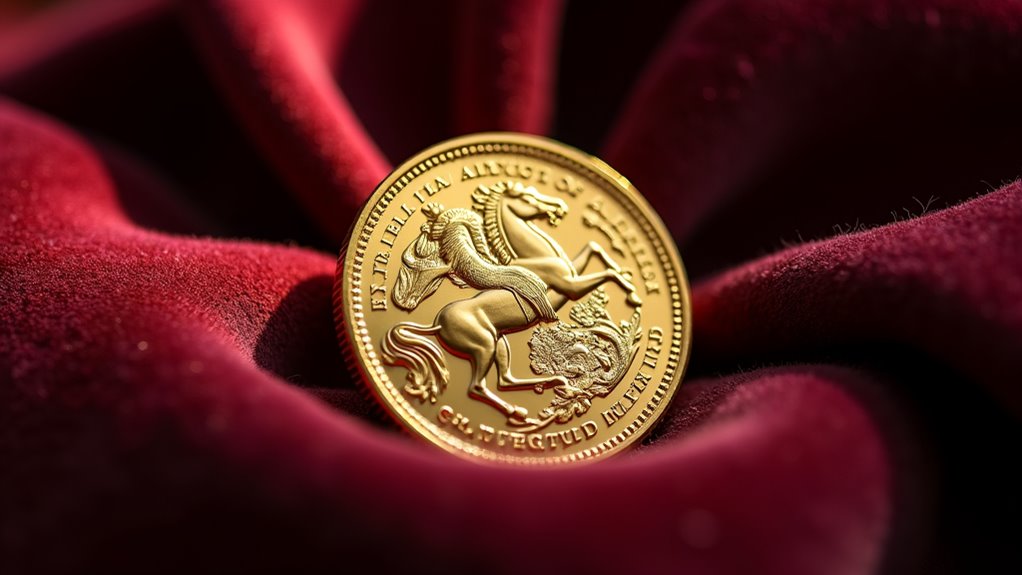
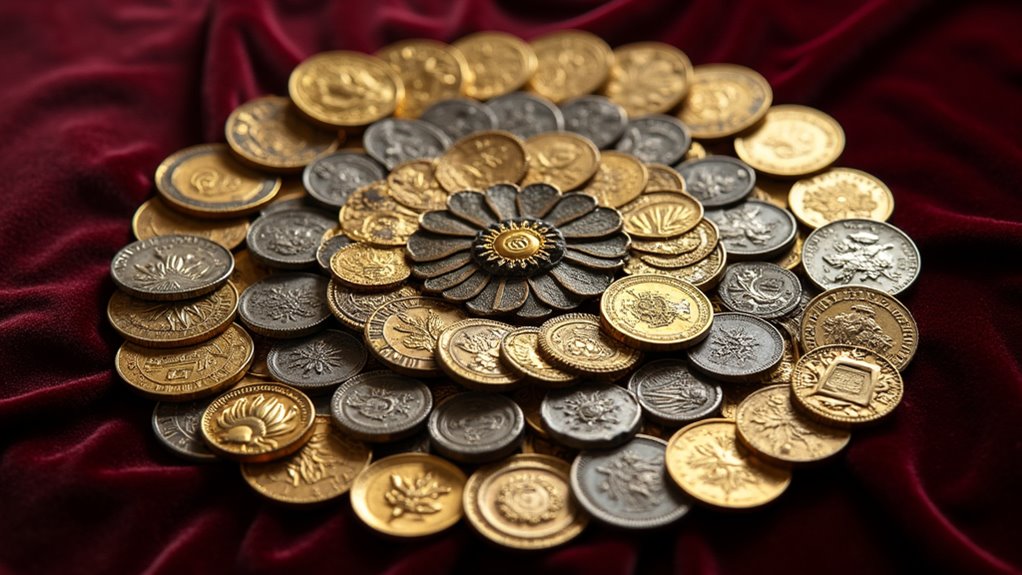
Numismatics is the scholarly study and collection of physical currency, encompassing coins, tokens, paper money, and commemorative medals. This fascinating field examines the historical significance, artistic merit, and economic value of currency throughout time. Expert numismatists analyse items based on rarity, condition, and cultural importance, while considering both bullion and collectible values. From ancient gold coins to modern specimens, numismatics offers a enthralling journey through monetary history that reveals countless untold stories.

Numismatics, a fascinating field that spans centuries of human civilisation, encompasses the scholarly study and collection of currency in its various forms, including coins, medals, tokens, and paper money. The term itself has rich linguistic roots, originating from the French word ‘numismatique’ in 1792, which derives from Late Latin and ultimately from the Greek ‘nomisma’, meaning coin. This connection to ancient languages reflects the deep historical significance of currency study.
The scope of numismatics extends far beyond mere collecting, delving into the cultural, economic, and artistic aspects of currency throughout history. While it doesn’t include non-traditional forms of currency like cigarettes or instant noodles used in bartering, it thoroughly examines the physical characteristics, rarity, and craftsmanship of official monetary items. This extensive approach helps scholars and enthusiasts understand how societies have evolved through their currency systems, including the gold coin collecting that highlights the intersection of value and history. Additionally, the popularity of gold coins to invest in has surged, reflecting their dual role as both collectibles and investment assets. The distinction between bullion and numismatic values further illustrates the diverse motivations behind currency collection.
The determination of numismatic value involves multiple factors, including rarity, market demand, and the condition of items. Collectible pieces often carry value beyond their intrinsic worth, with some rare coins commanding extraordinary prices regardless of prevailing market conditions. The appraisal process considers both historical significance and aesthetic appeal, making numismatics a sophisticated blend of art appreciation and economic analysis. Furthermore, certain coins, such as semi numismatic silver coins, can carry added premiums due to their unique features, which attract both collectors and investors alike.
In contemporary times, numismatics has evolved into a global pursuit, bringing together collectors, historians, and economists through various platforms. Digital technology has revolutionized how enthusiasts interact and trade, while prestigious institutions like the Smithsonian’s National Numismatic Collection, housing over 1.6 million items, continue to preserve this essential aspect of human heritage. Additionally, the allure of ancient gold coins captivates many collectors, highlighting the intersection of history and value in the numismatic world.
The importance of numismatics extends into multiple domains of study. It serves as an important tool for understanding economic history, technological advancement in minting, and artistic development across civilisations. Notable examples, such as the legendary 1933 Double Eagle coin and ancient Roman currency, provide tangible links to significant moments in human history.
Modern numismatics plays an important role in education, offering hands-on opportunities to learn about history, economics, and artistic achievement. Through coin shows, auctions, and museum exhibitions, the field continues to evolve while maintaining its fundamental purpose of preserving and studying currency-related artifacts.
This dynamic interplay between historical preservation and contemporary practice guarantees that numismatics remains relevant in our increasingly digital world. The field’s enduring significance lies in its ability to bridge past and present, offering insights into how societies have valued and exchanged goods throughout history.
Whether examining ancient coins or modern commemorative issues, numismatics provides a unique lens through which to view human civilisation’s development, making it an invaluable resource for scholars and collectors alike.
Beginners can start a numismatic collection by examining coins already in their possession and organising them in protective albums or holders.
They should choose a specific focus, such as Australian pre-decimal currency or precious metals.
Joining local coin clubs and attending numismatic events helps build knowledge and connections.
Regular research through reputable dealers and publications guarantees informed purchasing decisions.
Starting with modest investments allows collectors to develop expertise gradually.
Essential tools for handling and examining coins include protective cotton gloves and coated tongs to prevent damage from skin oils and scratches.
A quality magnifier (10x or greater) helps inspect fine details, while precision calipers and scales assist in authentication.
Soft sorting mats provide a safe workspace, and proper storage solutions like coin capsules or albums are vital.
Additional specialist equipment might include illuminated magnifiers or digital microscopes for serious collectors.
Reputable numismatic dealers can be found through established channels like the American Numismatic Association‘s Coin Dealer Directory and Money.org.
Local coin shops with BBB accreditation, such as Southwest Coin & Currency and Heartland Rare Coins, offer reliable service.
For auctions, Heritage Auctions and Stack’s Bowers Galleries are highly respected platforms.
Online marketplaces like eBay’s numismatic section provide options, though buyers should verify seller ratings and certifications.
Determining a coin’s authenticity requires multiple verification methods.
Collectors should start with visual inspection using magnification to examine details, lettering, and surface characteristics.
Physical tests like magnet checks and weight measurements provide further validation.
For definitive authentication, submission to respected grading services like PCGS or NGC is recommended.
Working with reputable dealers and maintaining thorough documentation of a coin’s provenance adds another layer of certainty.
The most valuable numismatic coins include the 1849 Double Eagle, currently valued at approximately $20 million and housed in the Smithsonian.
The 1933 Saint-Gaudens Double Eagle follows at $18.8 million, notable for its tumultuous history involving King Farouk.
The 1903 Fengtien Tael achieved $6.9 million at auction, whilst the 1907 Saint-Gaudens Ultra High Relief Double Eagle, famous for its artistic brilliance, previously sold for $2.99 million.
Affiliate Disclosure: This page contains affiliate links to Amazon AU and eBay AU. We may earn a small commission if you purchase through these links, at no extra cost to you.