Affiliate Disclosure: This page contains affiliate links to Amazon AU and eBay AU. We may earn a small commission if you purchase through these links, at no extra cost to you.
As an Amazon Associate I earn from qualifying purchases.

Karat.au is an independent educational resource. The content on this site is provided for general informational purposes only and is not intended as financial, investment, legal, or taxation advice. We do not hold an Australian Financial Services Licence (AFSL), and nothing on this site constitutes a personal recommendation or a substitute for independent professional advice. You should consult a licensed financial adviser or other qualified professional before making any financial decisions.
While we strive to provide accurate and up-to-date information, we make no warranties as to its reliability, currency, or completeness. Karat.au, its authors, and contributors accept no responsibility for any loss or damage arising from reliance on the information provided. For more details, please review our Terms of Use.

Affiliate Disclosure: This page contains affiliate links to Amazon AU and eBay AU. We may earn a small commission if you purchase through these links, at no extra cost to you.
Gold’s cultural significance spans millennia, from ancient Egyptian burial masks to Indigenous American spiritual artifacts. While Australia’s connection to gold came later through the 1850s gold rushes, the continent’s aboriginal peoples developed their own unique relationship with this precious metal. Traditional Indigenous Australian art rarely featured gold, instead focusing on ochre and natural pigments. However, the discovery of gold profoundly shaped Australia’s development as a nation, leaving an enduring legacy that continues to influence our cultural identity and artistic expressions.

Throughout the millennia, gold has captivated civilisations with its lustrous beauty and untarnishable nature, becoming deeply woven into the fabric of ancient art and cultural expression. From the earliest artifacts of the Eastern Mediterranean dating back to the 4th millennium BCE, to the sophisticated works of ancient Egyptian craftsmen, gold has served as both a spiritual conduit and a symbol of divine authority. The widespread adoption of the gold standard in later centuries highlights how deeply intertwined gold has been with notions of value and currency.
The ancient Egyptians, who referred to gold as the “flesh of the gods,” demonstrated remarkable prowess in metalworking, creating masterpieces like the iconic burial masks and intricate jewellery for their pharoahs. Their goldsmiths developed sophisticated techniques that would influence civilisations for generations to come, while the rich gold mines of Nubia provided the precious metal necessary for their elaborate religious and ceremonial artifacts.
In the ancient Americas, indigenous cultures approached gold with a distinctly spiritual perspective. The Andean civilisations were pioneers in gold exploitation, primarily utilising it for ritualistic purposes rather than mere adornment. Colombian cultures developed fascinating practices, such as placing gold objects in sunlight to absorb spiritual energy, while the Aztecs mastered complex techniques like lost-wax casting to create detailed, moveable ornaments. This reverence for gold can be compared to how the Incas revered gold as a sacred element in their religious practices.
The symbolism of gold transcended geographical boundaries, with Southeast Asia earning its reputation as a “golden paradise” through its abundant resources and sophisticated craftsmanship. In East Asia, goldsmithing techniques spread from China to Korea and Japan, creating a distinct aesthetic tradition that would influence the region’s artistic development for centuries.
Some of the world’s most renowned ancient gold artifacts stand as reflections of the remarkable skill of early craftsmen. The Muisca Raft from Colombia, crafted entirely in gold, showcases the deep connection between precious metal and cultural mythology. Similarly, the Celtic artistry displayed in the Broighter Hoard from Ireland demonstrates how different civilisations developed their unique approaches to working with gold.
While ancient cultures shared a reverence for gold’s untarnishable nature and solar associations, each society developed its own distinctive traditions and techniques. The Greeks and Romans emphasised gold’s connection to authority and luxury, while indigenous South American cultures pioneered innovative alloying techniques to enhance both the practical and aesthetic qualities of their creations.
Today, as we examine these ancient treasures, we gain invaluable insights into the technical sophistication and cultural values of our ancestors. Their masterful manipulation of gold continues to inspire contemporary artists and craftsmen, while their spiritual and cultural associations with the precious metal remain relevant in our modern understanding of its significance.
These enduring connections between gold, art, and cultural expression demonstrate the timeless appeal of this extraordinary metal across human civilisation.
Gold mining in ancient Australia severely impacted Aboriginal communities through environmental degradation and cultural disruption.
Mining activities destroyed sacred sites, contaminated waterways, and damaged traditional hunting grounds. Indigenous peoples faced displacement from their ancestral lands and experienced significant social upheaval.
While some Aboriginal people participated in mining as labourers or guides, they were often exploited and excluded from the economic benefits, leading to lasting inequalities that persist today.
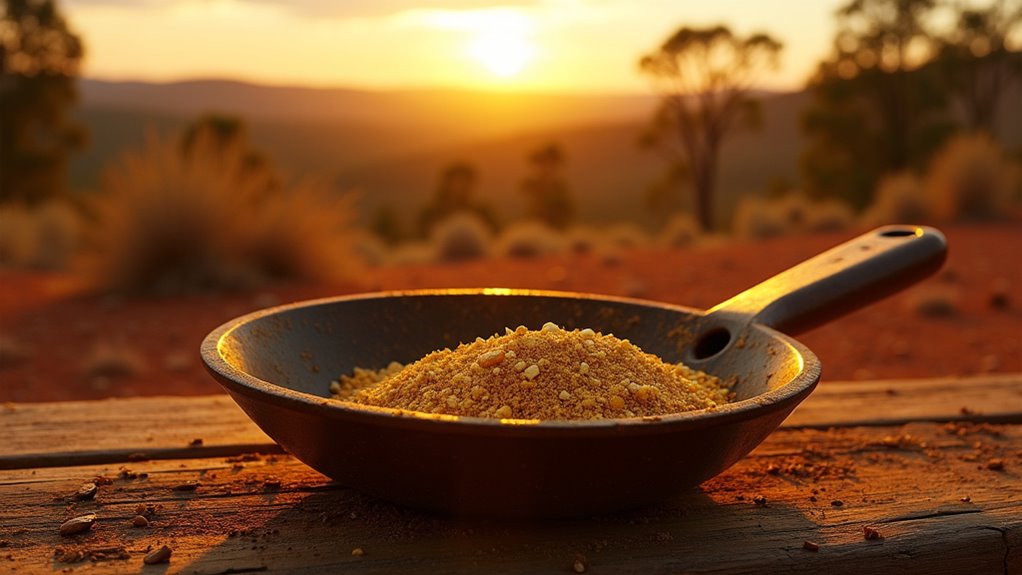
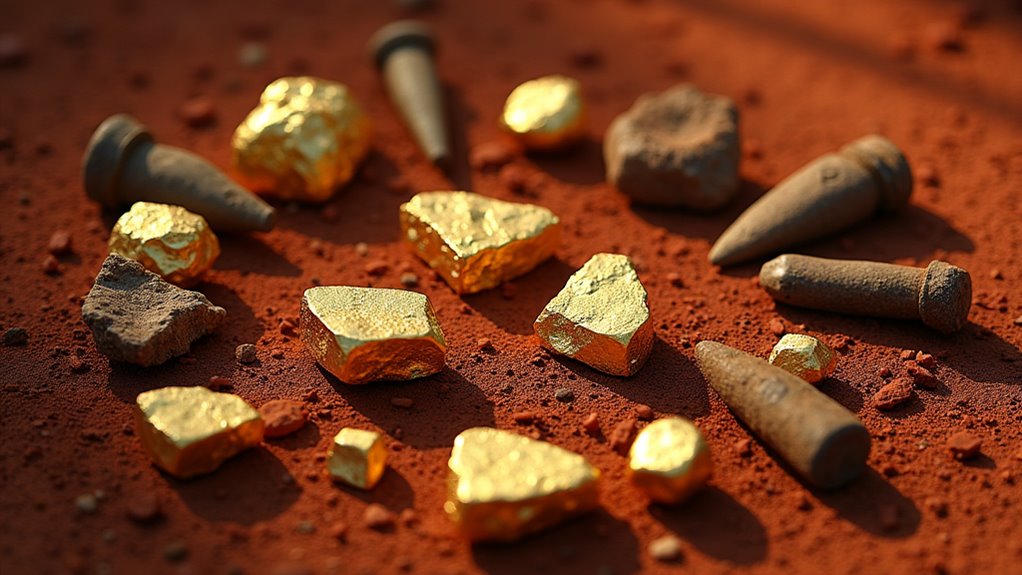
Ancient Australian cultures primarily relied on simple yet effective tools for gold extraction. Traditional implements included basic wooden pans, stone-crafted picks, and grinding stones.
These were supplemented by naturally-formed gullies and stream beds that aided in alluvial mining. While Indigenous communities weren’t extensively involved in systematic gold mining, they occasionally used wooden dishes and basic stone implements to collect small gold deposits for ceremonial purposes and trade.
Historical evidence does not support any gold trading between Aboriginal peoples and Pacific Island nations.
Traditional Aboriginal trade networks focused on practical materials like ochre, shells, and stone tools rather than precious metals.
While there were cultural exchanges between Aboriginal communities and Pacific Islanders, particularly in northern Australia and the Torres Strait region, gold only became significant after European colonisation.
Aboriginal cultures traditionally did not value gold as a trade commodity.
In Aboriginal Dreamtime stories, gold primarily held symbolic significance rather than material value.
It was often represented metaphorically through connections to the sun, sacred landscapes, and ancestral spirits. The element’s natural brilliance resonated with Aboriginal concepts of eternity and the cyclical nature of existence.
While not explicitly mentioned in many Dreaming narratives, gold-rich territories were frequently associated with spiritual significance and protected by ancestral guardians in traditional stories.
Traditional Aboriginal ceremonies and rituals did not incorporate gold artifacts or objects.
Unlike materials such as ochre, wood, and stone which held deep spiritual significance, gold wasn’t integrated into pre-colonial Aboriginal ceremonial practices.
While yellow ochre was commonly used in ceremonies to represent earth and sunlight, actual gold carried little cultural importance.
Contemporary Aboriginal artists now occasionally use gold tones in their work to symbolise sacred connections to Country and spiritual elements.
Affiliate Disclosure: This page contains affiliate links to Amazon AU and eBay AU. We may earn a small commission if you purchase through these links, at no extra cost to you.