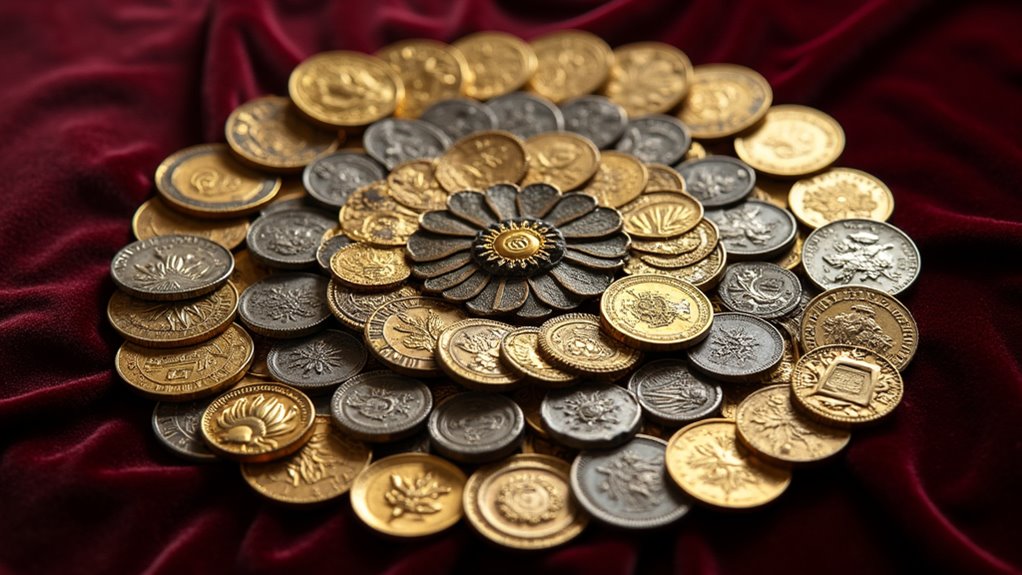
World numismatic coins chronicle humanity’s monetary evolution, from ancient Lydian staters to contemporary commemoratives. These treasured artefacts showcase diverse cultural artistry, historical significance, and economic development across civilisations. Professional grading systems like PCGS and NGC authenticate coins’ value, while collectors prize specimens from European Renaissance, Asian dynasties, and Latin American colonial eras. The fascinating world of numismatics reveals centuries of human achievement through these metallic time capsules.

Treasure troves of history lie within the fascinating domain of world numismatic coins, where each piece tells a unique story of civilisation’s journey through time. From the ancient hills of Lydia, where coinage first emerged around 600 BCE, to today’s sophisticated minting processes, these metallic witnesses have chronicled humanity’s economic and cultural evolution. Notably, the allure of ancient gold coins has captivated collectors for centuries, with their rarity and historical significance adding to their charm. Additionally, the growth of numismatic coin shops across the US has made these treasures more accessible to enthusiasts and collectors alike.
The transformation from hand-hammered medieval pieces to machine-minted currency during the Industrial Revolution marked a pivotal shift in numismatic history. Ancient Greek tetradrachms and Roman denarii not only facilitated trade but also celebrated military triumphs and honoured deities, while medieval European coins often displayed intricate religious symbolism and portraits of ruling monarchs. This evolution in coinage reflects the changing economic systems that shaped societies throughout history. Collectors often refer to essential literature on coin grading techniques to enhance their understanding of these historical artifacts.
Today’s collectors treasure pieces from diverse regions, each offering distinct characteristics. European numismatics showcase Renaissance commemoratives, while Latin American collections feature coveted Spanish colonial reales and Mexican Libertads. Asian specimens range from ancient Chinese cash coins to contemporary commemorative pieces, whilst African currencies reflect both pre-colonial heritage and colonial influences. Middle Eastern coins are particularly notable for their elegant Islamic calligraphy and historical trade significance.

The valuation of these numismatic treasures relies heavily on standardised grading systems, particularly the Sheldon scale, which ranges from 1 to 70. Coins achieving the coveted “mint state” designation (grades 60-70) command premium prices due to their exceptional preservation. Professional certification services like PCGS and NGC provide essential authentication, helping collectors navigate the complex world of coin assessment.
Modern numismatic pieces incorporate sophisticated anti-counterfeiting measures while maintaining artistic merit. Popular series like Olympic commemoratives attract worldwide attention, while classic specimens such as U.S. Morgan and Peace dollars continue to captivate collectors. The intricate craftsmanship of Indian Mughal emperors’ coins demonstrates the artistic heights achieved in historical minting.
Proper preservation remains paramount in numismatics. Collectors must store their treasures in air-tight containers, avoiding damaging elements like humidity and direct skin contact. These precautions help maintain both the aesthetic appeal and monetary value of these historical artifacts. The discovery of ancient coin hoards continues to provide valuable insights into historical wealth distribution and economic crises.
Beyond their monetary worth, numismatic coins serve as tangible links to past civilisations, reflecting economic systems, cultural values, and political structures of their respective eras. Their study reveals ancient trade routes, economic policies, and significant historical events, making them invaluable resources for understanding human history.

As modern commemoratives continue to mark national achievements and milestones, they carry forward this tradition of preserving cultural heritage through the art of coinage.
Frequently Asked Questions
How Can I Authenticate Rare World Coins Without Professional Grading Services?
Collectors can authenticate rare world coins through several reliable DIY methods.
Begin with careful visual inspection using a magnifying glass to examine mint marks, lettering, and edge details.
Compare weight and dimensions against known specifications using precision scales and calipers.

Non-destructive tests like the “ping test” and UV light examination can reveal authenticity.
Finally, thorough research of historical records and numismatic catalogues helps verify period-correct characteristics.
What Cleaning Methods Are Safe for Ancient International Coins?
For ancient coins, gentle cleaning methods are paramount to preserve their historical value and patina.
Distilled water soaking offers a safe starting point, with daily changes to gradually loosen debris. Soft-bristled toothbrushes and wooden toothpicks can carefully remove encrustations.

Professional conservationists recommend avoiding harsh chemicals or polishing. For oil residues on non-patinated surfaces, diluted acetone may be suitable.
Documentation of the cleaning process helps track interventions and results.
Which World Coins Have Shown the Highest Investment Returns Historically?
Historical data shows the 1933 Saint-Gaudens Double Eagle has achieved exceptional returns, selling for $18.9 million.
Ancient Roman Aurei and Greek Tetradrachms consistently deliver strong appreciation, while the 1794 Flowing Hair Dollar reached over $10 million at auction.

Among modern issues, the Australian Gold Kookaburra and Canadian Gold Maple Leaf series demonstrate reliable growth.
Chinese Qing Dynasty dollars have surged in value, particularly driven by Asian collector demand.
How Do Political Events Affect World Coin Collecting Market Values?
Political events greatly influence world coin market values through multiple channels. Economic policies, geopolitical tensions, and leadership changes directly impact currency strength and precious metal prices.
During periods of political uncertainty, collectors often gravitate towards bullion coins as safe-haven assets. Government decisions about minting, import restrictions, and sanctions can affect coin availability and tradability.
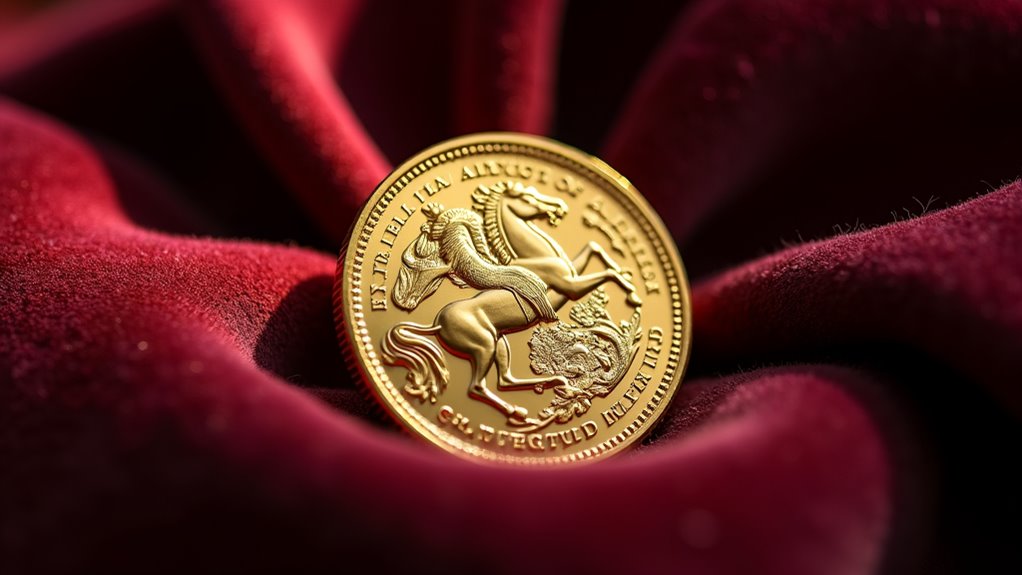
Market sentiment typically fluctuates with electoral cycles, creating temporary dips or surges in collectible values.
Where Can I Find Reliable Price Guides for International Commemorative Coins?
Several trusted online resources provide reliable pricing for international commemorative coins.
NGC World Coin Price Guide and PCGS World Coin Price Guide offer thorough valuations with grade-specific details.
The Greysheet Price Guide focuses on wholesale market values, whilst APMEX provides detailed price trends and historical data.
These guides regularly update their information, though it’s advisable to cross-reference multiple sources due to market volatility and grading variations.


