

Gold plays a central role in cultural celebrations worldwide, from the elaborate jewellery of African tribal ceremonies to the glittering ornaments of Indian Diwali festivities. The precious metal features prominently in Middle Eastern weddings, where brides don golden adornments, while European traditions like Venice’s Carnival showcase intricate gold masks. In Asia, the Lunar New Year sees families exchange gold ingots for prosperity. These traditions reveal how deeply gold’s significance runs through human civilisation’s ceremonial fabric.

Precious gold has woven its way through the tapestry of cultural celebrations worldwide, serving as a timeless symbol of prosperity, spirituality, and human achievement. From the sacred Golden Stool of Ghana’s Ashanti Kingdom to the glittering festivals of Asia, this precious metal continues to captivate and unite people in celebration across continents and cultures.
In African traditions, gold holds profound significance during tribal ceremonies, where chiefs don elaborate gold jewellery as symbols of their authority and spiritual connection. The Ashanti people’s reverence for gold manifests in their cultural artifacts and festivals, where the metal represents not just wealth but also protection and ancestral wisdom. Gold jewellery has been a timeless expression of status in various ancient civilizations, showcasing its historical importance. Additionally, gold was often used in sacred architecture to enhance the spiritual ambiance of temples and places of worship. The use of gold in these contexts highlights its role as a symbol of divinity in many cultures. Gold craftsmanship from regions like India illustrates the rich artistic traditions that have evolved over centuries.
West African markets pulse with life during festivals, showcasing intricate gold craftsmanship that speaks to centuries of artistic excellence.

Asian festivals embrace gold with equal enthusiasm, albeit through different cultural lenses. During Diwali, Indian households sparkle with gold ornaments and coins, while Chinese Lunar New Year celebrations feature the exchange of gold ingots for good fortune.
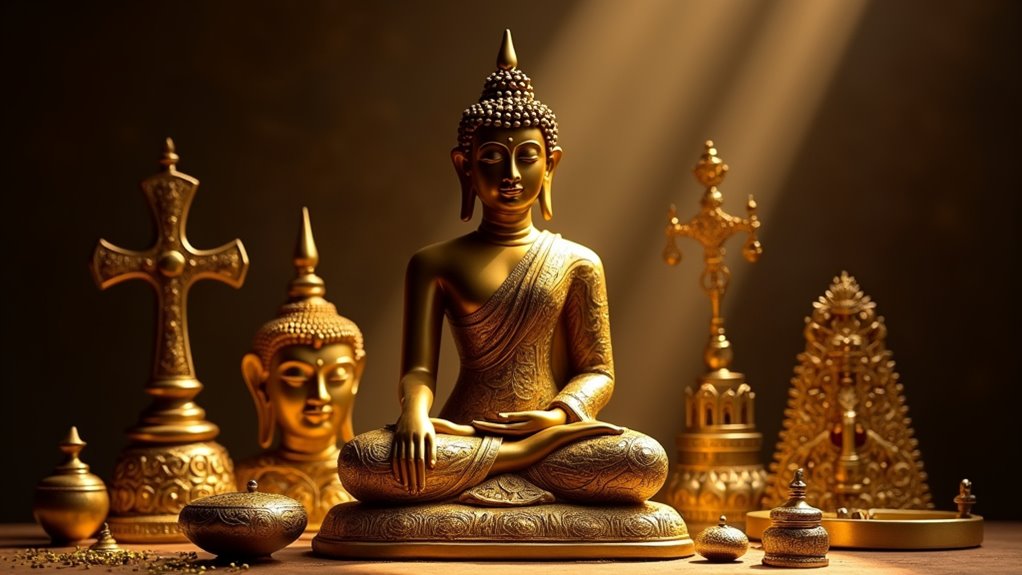
The Thai Songkran Festival sees gold-plated Buddha statues taking centre stage, while Tibetan Buddhist ceremonies incorporate gold into their sacred mandalas and religious artifacts.
Middle Eastern celebrations intertwine gold deeply within their festive traditions. Weddings in particular showcase this precious metal’s cultural significance, with brides adorned in gold jewellery symbolising prosperity and blessings.
During Eid al-Fitr, the practice of giving gold gifts reinforces community bonds, while bustling gold bazaars during festivals highlight the region’s masterful artisanry.
European festivals offer their own unique gold traditions. From the gold-coloured chocolate coins distributed on Saint Nicholas’ Day to the ornate gold masks of Venice’s Carnival, these celebrations reflect centuries of cultural evolution.
Nordic Midsummer festivals sometimes incorporate gold motifs to honour the sun, while Spain’s Semana Santa processions feature gold-adorned religious artifacts.
In the sphere of global celebrations, gold maintains its position as a universal symbol of excellence. The Olympic Games‘ gold medals represent the pinnacle of athletic achievement, while Golden Jubilees mark fifty years of dedication in leadership or marriage.
Entertainment awards ceremonies worldwide gleam with golden trophies, celebrating outstanding artistic accomplishments.

Indigenous and tribal celebrations across the globe incorporate gold elements that reflect their unique cultural heritage and spiritual beliefs. These traditions often emphasise gold’s connection to divine forces and natural elements, demonstrating how this precious metal transcends mere monetary value to become a bridge between the physical and spiritual domains. Furthermore, the use of gold jewelry in various cultures often carries spiritual meanings that enhance the significance of these celebrations.
Through these diverse celebrations, gold continues to unite people in moments of joy, reverence, and cultural pride, proving its enduring significance in human celebration and tradition.
Frequently Asked Questions
How Much Gold Is Typically Used in Festival Decorations Worldwide?
Globally, festival decorations consume approximately 5-10% of annually mined gold.
India’s Diwali celebrations alone account for 200-300 tonnes yearly through jewellery purchases and ornaments.

Thai temples receive several kilogrammes in donations during Songkran, while millions of gold-accented items are sold across Asia for Lunar New Year.
Religious buildings worldwide incorporate gold leaf for sacred celebrations, contributing to the precious metal’s significant cultural use.
Can Tourists Participate in Gold-Themed Cultural Celebrations in Foreign Countries?
Tourists can actively participate in gold-themed celebrations worldwide, though cultural sensitivity is essential.
Many festivals welcome international visitors, offering unique experiences like India’s Diwali gold-buying tradition or Mongolia’s Gold Eagle Festival. Visitors can join as spectators or participants in workshops, traditional ceremonies, and local markets.
While language barriers may present challenges, local guides often facilitate meaningful engagement. Most celebrations require advance planning and respect for cultural protocols.
What Safety Measures Protect Valuable Gold Items During Festival Displays?
Cultural festivals protect valuable gold items through thorough security systems.
Multi-layered measures include reinforced display cases, surveillance cameras, and trained security personnel stationed strategically. Access control limits crowd density near displays, whilst alarm systems connect directly to authorities.
Staff undergo rigorous background checks and training for emergency scenarios. Dedicated security checkpoints screen visitors, and clear protocols guarantee swift responses to potential incidents.
Are There Special Insurance Requirements for Festivals Featuring Gold Artifacts?
Festivals featuring gold artifacts require specialised insurance coverage to protect these valuable items.
General liability insurance is essential, typically starting from $49 per event, while fine art policies cover theft, fire and accidental damage.
Organisers must obtain policies that include transportation and storage protection.
Additional coverage may be needed for natural disasters, particularly in earthquake-prone regions.
Periodic reappraisals guarantee adequate coverage as gold values fluctuate.
How Do Different Cultures Preserve Their Gold Ceremonial Items Between Festivals?
Different cultures employ diverse methods to safeguard their precious gold ceremonial items between festivals.
Most communities utilise temperature-controlled storage facilities with specific humidity settings. Traditional practices often involve wrapping items in soft, acid-free cloths and storing them in secure, purpose-built containers.
Some cultures incorporate spiritual rituals during storage, while others rely on modern conservation techniques like UV-filtered display cases and digital documentation to track the items’ condition.


