

Numismatic gold coins offer unique investment potential through their combination of precious metal content and historical significance. These pieces can appreciate considerably beyond bullion value due to their rarity, artistic merit, and collector demand. However, high premiums, subjective valuations, and complex market dynamics present notable risks. Success requires thorough research, authentication through professional grading services, and working with reputable dealers. Understanding the nuances of this specialised market reveals fascinating opportunities for the discerning investor.

Why do some investors choose to venture beyond traditional bullion when diversifying their precious metals portfolio? The allure of numismatic coins often stems from their unique combination of precious metal content and historical significance. These collectible pieces offer more than just their weight in gold; they carry stories of civilisations, artistic merit, and the potential for considerable appreciation beyond mere gold value. Many collectors and investors are particularly drawn to ancient gold coins, which are regarded as some of the most prized pieces due to their historical importance. Additionally, many investors rely on professional grading services to ensure authenticity and quality, which can significantly impact value. Understanding the significance of gold coin collecting can further enhance the appreciation of these historical artifacts.
The investment potential of numismatic coins presents several compelling advantages. Unlike standard bullion, whose value primarily tracks the spot price of gold, numismatic coins derive additional worth from their rarity, historical significance, and artistic design. This characteristic can lead to impressive returns, particularly when market conditions align with collector demand. Moreover, their value is often driven by collector demand, which can significantly enhance profitability during peak interest periods.
Numismatic coins transcend mere metal value, offering unique investment opportunities through their historical significance, scarcity, and artistic merit.
Furthermore, these coins often demonstrate resilience against short-term gold price fluctuations, potentially offering a more stable investment vehicle.

However, the numismatic coin market isn’t without its complexities and risks. The high premiums commanded by these pieces can greatly impact liquidity, making it more challenging to sell quickly when needed. Valuation remains largely subjective, influenced by factors such as rarity, condition, and collector interest. Newcomers to the market may find themselves vulnerable to overpriced pieces or, worse yet, counterfeit specimens without proper expertise or guidance.
The market dynamics of numismatic coins operate differently from traditional bullion markets. Pricing reflects a delicate balance between gold content, historical significance, and collector demand. Unique characteristics like minting errors or limited production runs can dramatically affect value. While this complexity can create opportunities for considerable returns, it also demands thorough research and understanding of market trends.
From a practical perspective, investing in numismatic coins requires careful consideration of liquidity and accessibility. Unlike bullion coins, which can be readily traded through numerous channels, numismatic pieces often require specialised dealers or auction houses for ideal sale prices. Additionally, proper certification and authentication become essential elements in establishing and maintaining value.
Tax implications vary greatly across jurisdictions, with some countries offering advantageous treatment for certain numismatic coins. While this can enhance their appeal as investment vehicles, investors must navigate complex regulations regarding rare collectibles and potential export restrictions. Understanding these legal nuances becomes essential for maximising investment potential.

Success in numismatic coin investing typically requires a methodical approach focused on authenticity, market research, and patience. Working with reputable dealers and ensuring proper certification through recognised grading bodies helps mitigate risks.
Additionally, maintaining a diversified portfolio that balances both numismatic and bullion holdings can help maximize potential returns while managing risk exposure. As with any investment, thorough due diligence and careful consideration of individual circumstances remain paramount. Moreover, understanding the potential returns of numismatic coins can significantly inform investment decisions.
Frequently Asked Questions
How Do I Authenticate a Gold Numismatic Coin Before Purchasing?
Authentication of gold numismatic coins requires multiple verification methods.
Experts recommend seeking certification from respected services like NGC or PCGS before purchase.

Physical inspection includes checking weight, dimensions, and magnetic properties.
Advanced testing methods such as specific gravity and XRF analysis provide conclusive results.
Buyers should purchase from reputable dealers, examine authentication documentation carefully, and familiarise themselves with standard characteristics of their desired coin type.
Which Gold Numismatic Coins Have Shown the Highest Appreciation Over Time?
The Saint-Gaudens $20 Gold Double Eagle consistently demonstrates remarkable appreciation, with a rare 1933 specimen achieving $18.9 million at auction.
The Edward III Florin, valued at $6.8 million, exemplifies extraordinary long-term value growth.

King Farouk’s 1933 Double Eagle, selling for $7.6 million, shows the potential for significant returns.
Among modern pieces, the 2023 Crown Coin, adorned with diamonds and valued at $23 million, represents impressive contemporary appreciation.
Where Can I Safely Store My Collection of Gold Numismatic Coins?
Secure storage options for gold numismatic coins include high-quality home safes, bank safety deposit boxes, and professional vaulting services.
Home storage requires fireproof safes and climate control measures, while bank deposits offer robust security but limited access.

Professional vaulting facilities provide specialised climate-controlled environments with advanced security systems.
Each method should include proper documentation, protective holders, and careful handling practises to preserve the coins’ condition and value.
Are Gold Numismatic Coins Covered by Standard Home Insurance Policies?
Standard home insurance policies typically provide limited coverage for gold numismatic coins, often capping protection at nominal amounts like $200.
These policies generally treat coins as collectibles rather than bullion, requiring additional riders or specialised insurance for adequate protection.
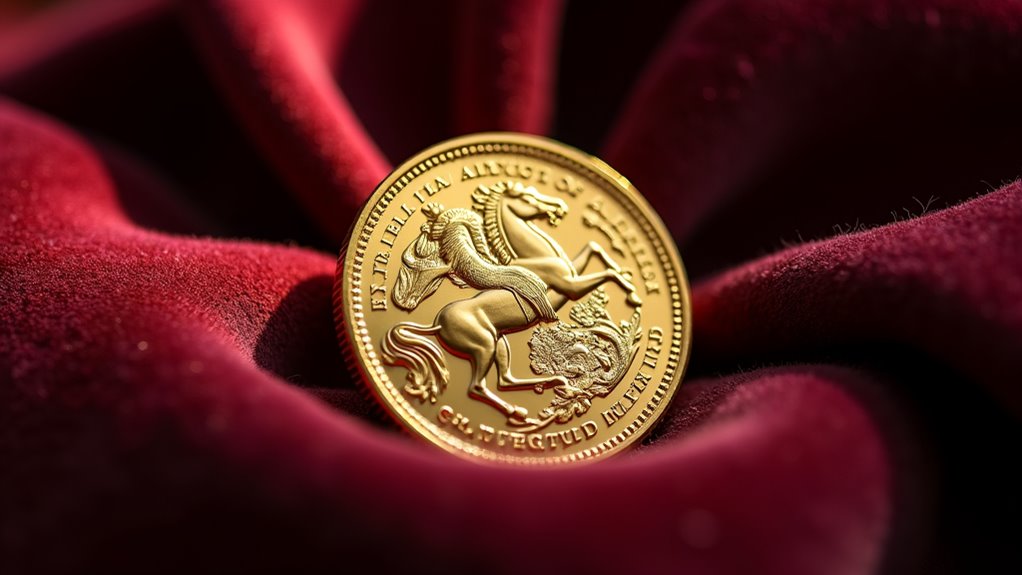
Without specific endorsements, standard policies may not account for the coins’ true numismatic value and usually exclude risks like depreciation, natural wear, or transit-related losses.
What Cleaning Methods Are Safe for Maintaining Gold Numismatic Coins?
Several safe cleaning methods exist for gold numismatic coins. A gentle solution of mild soap and distilled water can remove surface dirt when used with a soft microfiber cloth.
Olive oil applied carefully may help loosen stubborn debris. For tougher stains, diluted chemical solutions like citric acid can be considered, though these require thorough rinsing.
It’s essential to avoid abrasive tools and handle coins with care, as improper cleaning may diminish their collectible value.


